
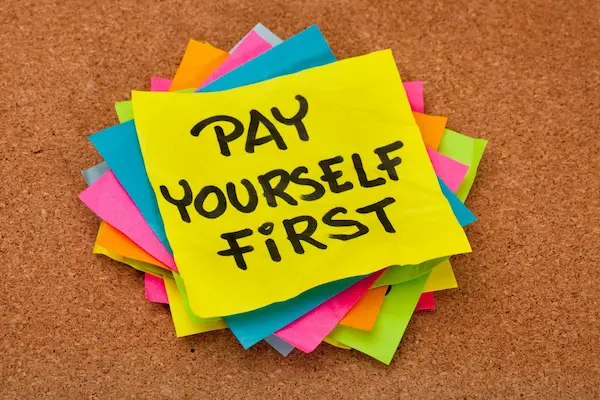
Saving money feels hardest when it depends on mood, energy, or end-of-month leftovers, because life will always find something “more urgent” to spend on.
The pay yourself first budget method flips that script by turning saving into a default action, while still respecting the reality of essential bills that must be paid on time.
Why the pay yourself first budget method beats willpower budgeting
Willpower-based budgeting quietly assumes you will make the “right” choice dozens of times each week, even when you are tired, stressed, or dealing with surprise expenses.
A system-based budget works differently because it reduces the number of decisions you need to make, and it replaces good intentions with simple, repeatable actions that happen automatically.
Most workers who want saving to be automatic rather than optional are not failing due to laziness, because they are usually failing due to a system that asks too much of their attention.
Behavior follows environment, so when money sits in your spending account, it naturally gets assigned to whatever feels pressing in the moment.
Pressure builds when the month progresses, which makes saving feel like a sacrifice instead of a plan, and that emotional friction is exactly what this method removes.
The hidden problem with “I’ll save what’s left”
Leftover-based saving sounds logical, yet it often produces unpredictable results because the leftover amount is determined by everything else that happened first.
Unexpected costs, social plans, price increases, and small daily purchases tend to expand into the space available, which means “leftovers” shrink without you noticing.
Personal finance rarely breaks because of one huge mistake, since it usually breaks due to many small tradeoffs that feel reasonable in isolation.
Consistency matters more than intensity for building a savings habit, and consistency is hard when your plan depends on perfect behavior across an entire month.
How defaults and friction shape your money choices
Defaults are powerful because whatever happens automatically becomes “normal,” and normal is what you keep doing even when motivation dips.
Friction works the same way in reverse, because when saving requires extra steps, extra logins, or extra decisions, your brain treats it like extra work.
Automated savings reduces friction by making the desired action the easiest action, which is why the method feels calmer after the first setup.
Confidence grows when your plan works on ordinary weeks, not only on your best weeks, and automation is what makes that reliability possible.
How the pay yourself first budget method actually works inside a real budget
The core idea is simple: you decide your budget priority before spending begins, and then you move money to savings early so it cannot be accidentally spent later.
Clarity is essential here, because “pay yourself first” does not mean “ignore bills,” and it does not mean “save so much you create overdrafts.”
The healthiest version of the method protects essential obligations first, then saves second, and then lets the remaining money cover lifestyle spending without constant guilt.
Structure replaces stress when you know what happens first, what happens next, and what happens only if money remains after the first two steps.
The order of operations that keeps life stable
A practical sequence starts by identifying the bills that must be paid to keep your life functioning, which typically includes housing, utilities, transportation, insurance, and minimum debt payments.
After essentials are accounted for, “pay yourself first” means moving money into savings immediately after payday, before discretionary spending can compete for those dollars.
Only then does the remaining money become the flexible spending pool, which you can use for groceries, personal spending, dining out, hobbies, and everything else.
That order sounds small, yet the emotional shift is big, because your future gets funded before your present starts improvising.
The bills-first guardrails that prevent overdrafts
Guardrails are the rules you set so the method cannot accidentally harm you, and the biggest guardrail is ensuring enough cash remains to cover bills that hit before the next payday.
Timing matters because a budget is not only about amounts, since it is also about when money arrives and when money leaves.
A simple way to reduce risk is to keep a small buffer in your bill-paying account, so a weird billing date or a delayed paycheck does not trigger fees.
Another safety move is to separate “bill money” from “spend money,” because separation makes it harder to borrow from your rent fund just because a weekend looks fun.
Set your budget priority without chasing perfection
Perfectionism often disguises itself as planning, so the goal is not to build the world’s most detailed spreadsheet but to build a system you will actually follow.
Good budgeting feels boring in the best way, because boring means predictable, and predictable means your savings habit can grow without drama.
Practical priorities come from your life, not from someone else’s template, so your plan should reflect your pay schedule, your responsibilities, and your stress tolerance.
Pick a “minimum viable” savings amount you can defend
A minimum viable savings amount is the smallest transfer you can commit to even on a chaotic month, which makes it a perfect foundation for consistency.
Smaller automatic wins beat larger occasional wins, because the brain trusts routines that happen reliably, and trust is what keeps you going.
That minimum can be increased later, yet it must be believable now, because a plan you resent is a plan you will eventually abandon.
Progress becomes easier when the baseline is stable, since you can add “seasonal boosts” without feeling like you failed when you return to normal.
Decide what “saving” means for you this season
Saving is not only one bucket, because different goals need different containers, and mixing them can make you feel confused about what your money is doing.
An emergency fund supports stability, because it covers the unexpected without forcing you into debt or panic.
Sinking funds support planned surprises, because car repairs, annual fees, gifts, and travel often happen regularly even when they feel sudden.
Retirement saving supports long-term freedom, because your future self deserves the same respect as your current self.
- Emergency fund saving works best when it is accessible but separate, so it does not quietly become weekend spending.
- Sinking fund saving feels easier when you name it clearly, because “Car Maintenance” is harder to steal from than “Extra Money.”
- Retirement saving is simplest when contributions happen automatically, because “later” is the most expensive date on the calendar.
- Goal-based saving stays motivating when the goal is emotionally meaningful, because meaning beats math when motivation is low.
A sample pay yourself first budget method flow you can copy
Examples are helpful when you want a clear starting point, so the flow below is designed as a simple pattern you can adapt rather than a rigid rule you must follow.
Your numbers will be different, and that is completely fine, because the power of the method lives in the sequence and automation, not in a specific percentage.
Step-by-step budget flow after each paycheck
- Start by listing the bills that must be paid before your next paycheck arrives, so you know the minimum cash your bill account must hold.
- Move that bill amount into a dedicated bills account immediately, because separating it protects you from accidental overspending.
- Transfer your chosen savings amount next, because paying yourself first only works when saving happens before lifestyle spending begins.
- Send a smaller amount to any sinking funds you are actively using, because future expenses become less stressful when they are pre-funded gradually.
- Leave the remaining money in your spending account, because the leftover is now truly yours to use without stealing from obligations or goals.
- Review the flow after two pay cycles, because real life will reveal timing issues faster than any theoretical plan.
A simple “three-account” structure that supports automated savings
Many people find it easier to maintain budget priority when accounts have clear jobs, because clarity reduces mental load and cuts down on internal negotiations.
- A Bills Account holds money that is reserved for recurring essentials, so rent, utilities, insurance, and minimum payments are not competing with impulse spending.
- A Spending Account holds the money you will actually use day to day, so groceries, transportation, and fun purchases are funded realistically.
- A Savings Account holds money you do not want to touch casually, so your emergency fund and near-term goals can grow without being raided.
Separation is not magic, yet it creates psychological boundaries that make better choices easier, especially when you are busy and do not want to think.
Momentum improves when each account has a purpose, because you stop asking “Can I afford this?” and start asking “Which account should pay for this?”
A sample monthly rhythm that respects bills first
Some bills are due early in the month while others come later, so your pay-yourself-first setup should follow your calendar rather than fighting it.
Workers paid every two weeks often prefer to fund half of the monthly bills from each paycheck, because the approach smooths cash flow and reduces the feeling of one “expensive” paycheck.
Workers paid monthly often prefer to fund bills immediately when income lands, then automate savings, and then keep a weekly spending limit to prevent a mid-month squeeze.
Irregular income earners often prefer to base essentials on a conservative income estimate, then treat extra income as bonus savings or accelerated goal funding.
Automated savings ideas that don’t require daily motivation
The best automation is the kind you barely notice, because it quietly supports you while you focus on work, family, health, and everything else that matters.
Several automation routes exist, so you can choose the one that matches your paycheck setup and your comfort with banking tools.
Not every employer or bank offers the same features, and you should always confirm any fees, transfer limits, or timing rules directly with your providers.
Notice: This content is independent and has no affiliation, sponsorship, or control over any institutions, platforms, or third parties mentioned.
Use payroll to pay yourself first before money hits your spending account
Payroll split is powerful because it moves money at the source, which means your savings never has to survive contact with your spending account.
Some employers allow you to send part of your paycheck to a separate account, so you can route savings automatically without setting additional transfers.
- Directing a fixed amount into savings works well when your income is stable, because consistency makes forecasting and bill timing easier.
- Directing a percentage into savings can work well when pay varies, because the savings amount flexes with income without requiring you to manually recalculate.
- Routing a small portion into a sinking fund account can reduce future stress, because predictable “irregular” expenses stop being financial emergencies.
Even when payroll split is not available, a similar effect can be created by scheduling transfers for the same day your paycheck lands, so the money moves before you get used to seeing it.
Schedule recurring transfers that match your pay cycle
Recurring transfers are a classic automated savings tool, because they turn your intention into a calendar event that happens whether you remember it or not.
Weekly transfers feel gentle and steady, which helps many people who prefer smaller moves that do not disrupt the spending account too noticeably.
Payday transfers feel clean and decisive, because they connect saving to income and reinforce the identity of someone who pays themselves first.
- Choose a transfer day that is safely after your paycheck posts, because a transfer that runs too early can create avoidable headaches.
- Select an amount you can support even in a “normal hard month,” because the goal is consistency first and optimization second.
- Set the transfer to go to a separate savings bucket, because separation reduces temptation and protects your savings habit.
- Monitor for two cycles and adjust, because timing issues are common and easy to fix once you see them.
Create “rules” that sweep money into savings without you noticing
Rule-based saving feels almost invisible, which is why it can be so effective for people who dislike feeling restricted by tight budgets.
- Round-up style saving can collect small amounts frequently, so you build momentum without feeling like you gave up anything significant.
- End-of-day or end-of-week sweep rules can move a set amount when your balance is above a threshold, so saving happens only when you can afford it.
- Spending-category caps can prompt an automatic transfer to savings when you stay under budget, so “winning the week” directly funds your goals.
Rules should be simple, because complicated rules require attention, and attention is the very thing automation is designed to protect.
Building a pay yourself first budget method that still pays the bills
“Pay yourself first” becomes sustainable when essentials are respected, so the method should be built around a bills-first foundation that prevents late payments and stress.
Stability is the point, because a savings plan that creates constant fear of overdraft will not survive for long.
Start with an essentials map, not a feelings-based estimate
An essentials map is a list of obligations with due dates, because due dates dictate cash flow and cash flow dictates what is safe to automate.
Accuracy improves when you review recent statements or billing confirmations, because memory tends to underestimate how many subscriptions and annual fees exist.
- Housing costs deserve first position, because being housed is the base layer that keeps everything else possible.
- Utilities deserve clear funding, because volatility in usage can cause surprise spikes that disrupt a tight plan.
- Transportation deserves a realistic line item, because commuting and maintenance are not optional for many workers.
- Insurance deserves consistency, because lapses can create expensive problems that erase months of savings.
- Minimum debt payments deserve protection, because missed payments can trigger fees and credit damage that compound stress.
Once essentials are mapped, paying yourself first becomes a controlled decision rather than a hopeful guess.
Use a bill buffer to protect your system from timing surprises
A bill buffer is extra cash kept in the bills account, and its job is to absorb timing issues like weekends, holidays, or a bill that hits a day earlier than usual.
Peace increases when the buffer exists, because the system stops feeling fragile and starts feeling resilient.
Buffers can be built gradually, because even a small cushion reduces the probability of fees and frantic transfers.
Handle variable bills with sinking funds and averages
Variable bills are tricky because they change, yet they are predictable in the sense that they will keep occurring, so treating them like surprises is optional.
A sinking fund for utilities or car maintenance spreads the cost across many paychecks, which makes the month feel smoother even when the bill spikes.
Using an average can help planning, because it creates a reasonable baseline, while the sinking fund absorbs the months that land above that baseline.
Protect groceries and essentials with a realistic spending plan
Groceries are essential, yet they are also flexible, so they often become the “pressure valve” category when the budget is too tight.
Realism matters because a plan that underfunds basics will push you into frustration, and frustration is when people quit systems entirely.
Short weekly check-ins can keep spending honest, because small corrections early are easier than large corrections late.
Common mistakes that make pay yourself first feel like it “doesn’t work”
Most failures are not moral failures, because they usually come from setup issues that can be fixed with small changes.
Honest troubleshooting builds confidence, because it replaces self-blame with practical adjustments.
Saving too aggressively before your cash flow is stable
Over-saving can backfire when it causes overdrafts or bill anxiety, because you will end up pulling money back and training your brain to distrust saving.
A smaller automatic transfer that never gets reversed is stronger than a larger transfer that constantly gets undone.
Gradual increases are easier to sustain, because your lifestyle adapts slowly without triggering a sense of deprivation.
Keeping savings in the same place you spend from
Proximity creates temptation, so savings that sits beside spending often gets treated like “available money” during emotional moments.
Separating accounts helps, because it forces a deliberate action to access savings, and deliberate actions create a pause that prevents impulsive decisions.
Ignoring due dates and relying only on monthly totals
Monthly totals can look fine while timing fails, because a budget can be “balanced” on paper and still produce overdrafts in real life.
Due dates matter more than spreadsheets when you are living inside the calendar, so aligning automation with bill timing is a key step.
Forgetting to plan for non-monthly expenses
Annual renewals, car registrations, holiday spending, and medical costs often cause financial whiplash, because they arrive outside the monthly rhythm.
Sinking funds soften those hits, because you are pre-paying in small amounts rather than paying all at once.
- Annual fees deserve a dedicated bucket, because a predictable charge should not become a credit card emergency.
- Gift spending deserves a plan, because generosity feels better when it is funded instead of financed.
- Medical and self-care costs deserve realism, because ignoring them does not make them disappear.
How to combine pay yourself first with debt, without losing momentum
Debt and saving often compete emotionally, because one feels like cleaning up the past while the other feels like building the future.
A balanced approach works best for many people, because having some savings prevents new debt when life happens.
Protect a starter emergency fund before aggressive payoff
A small emergency cushion can prevent repeated setbacks, because even modest surprises can otherwise force you to use high-interest credit.
Stability supports consistency, so the goal is to avoid the pattern of paying debt down and then immediately running it back up.
Automate both goals so neither depends on motivation
Automation can fund savings and debt simultaneously, because both can be treated like fixed obligations rather than optional choices.
Clarity improves when each transfer has a label, because you can see progress in two directions without confusion.
- Route bill money first, because stability is the platform for every other goal.
- Automate the minimum viable savings transfer next, because resilience prevents future debt.
- Automate an extra debt payment after that, because steady payoff builds momentum without risking late bills.
- Increase the debt payment later when savings and cash flow feel stable, because intensity works best on a stable foundation.
Make your savings habit stronger with simple behavior design
Habits stick when they are obvious, easy, and rewarding, so your system should make saving visible enough to feel progress without making it accessible enough to spend.
Identity matters because people repeat what they believe about themselves, and “I am someone who pays myself first” becomes true through repeated action.
Use tiny celebrations that reinforce consistency
Celebration does not need to be expensive, because the point is to mark the win and teach your brain that saving is a positive action.
Checking the savings balance weekly can feel motivating when you treat it as proof of reliability rather than as a test you might fail.
- A short note in your phone can reinforce the streak, because written proof makes progress feel real.
- A visual tracker can keep motivation high, because progress that you can see is progress you are more likely to protect.
- A small, planned reward can make consistency feel pleasant, because the brain repeats what it enjoys.
Increase savings automatically when life gets easier
Raises, bonuses, and paid-off debts create “new money,” yet lifestyle inflation often consumes it quietly unless you decide in advance what should happen.
A simple rule is to allocate part of any increase toward automated savings, because future stability is a better long-term purchase than a slightly bigger monthly spending habit.
Small increases feel painless, because your spending life barely changes, while your savings habit becomes stronger each month.
A practical “pay yourself first” script for your next payday
Scripts reduce stress because you do not have to invent decisions on the spot, and payday is the perfect moment to rely on a pre-written sequence.
Use the script below as a starting template, then adjust it to match your timing, your bills, and your comfort level.
- Confirm which bills land before the next paycheck, because that list defines what must be protected immediately.
- Move the necessary amount into your bills account, because the rent and utilities should never compete with weekend spending.
- Trigger your automated savings transfer, because paying yourself first only works when it happens early and consistently.
- Send a smaller transfer to any sinking funds you are actively building, because future expenses become calmer when they are pre-funded.
- Set a simple spending boundary for the week, because guardrails reduce regret without forcing you into extreme restriction.
- Review the results briefly after a few days, because quick course corrections are easier than end-of-month panic.
Quick-start checklist for the pay yourself first budget method
Checklists are useful because they turn a big concept into a sequence of small actions, and small actions are what build a lasting system.
- Write down your paydays and your bill due dates, because the calendar determines what is safe to automate.
- Separate bills money from spending money, because separation prevents accidental borrowing from essentials.
- Choose a minimum viable savings transfer you can keep even in hard months, because consistency builds the savings habit.
- Automate the transfer for payday or the day after, because early saving prevents late-month leftovers from disappearing.
- Create one sinking fund for the next predictable irregular expense, because future-you deserves fewer surprises.
- Add a small buffer in the bills account over time, because resilience reduces fees and stress.
- Review and adjust after two pay cycles, because real life always teaches what a plan cannot predict.
Final thoughts: automatic saving is a system, not a personality trait
Automatic saving is not reserved for “disciplined people,” because discipline is unreliable while systems are dependable.
Freedom grows when you design your environment so the best choice happens by default, and the pay yourself first budget method is one of the cleanest ways to make that real.
Progress will feel calmer when your budget priority is clear, your automated savings runs quietly in the background, and your essential bills are protected by timing and separation.
Consider starting smaller than your ego wants, because starting small and staying consistent is how you become the person who pays yourself first without having to fight yourself every month.
Educational note: This article is for general information only and is not personal financial advice, and you should consider your own situation when making decisions.
Notice: This content is independent and has no affiliation, sponsorship, or control over any institutions, platforms, or third parties mentioned.