
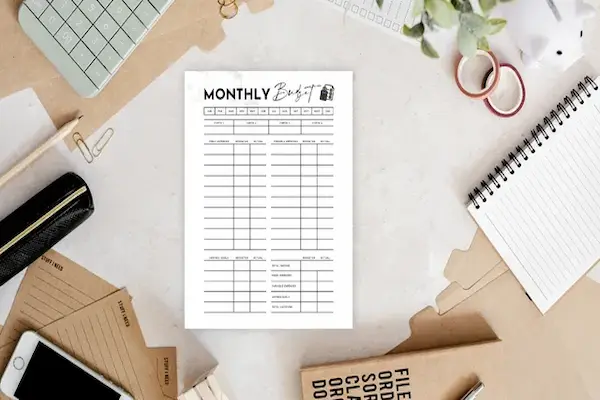
Saving “whatever is left” sounds sensible, yet most months are designed to leave you with nothing left, especially when life is busy and spending is frictionless.
Real progress happens when savings goals live inside the budget like a real bill, because the plan decides first and the leftovers can stop pretending they exist.
Setting monthly savings goals budget: why “left over” rarely exists

Most beginners want to save and still get stuck, because money gets assigned by default to habits, subscriptions, convenience spending, and timing problems before you ever make an intentional decision.
Card swipes and auto-renewals can drain cash quietly, so the month feels normal until the balance check turns into confusion and stress.
Budgeting becomes empowering when you treat saving as a priority line item, since priorities are exactly what budgets are meant to protect.
Consistency matters more than intensity, because a small monthly target repeated for a year can beat a big target you abandon after two weeks.
Motivation stays higher when the plan is realistic, because unrealistic targets create guilt, and guilt is one of the fastest ways to stop looking at your numbers.
The invisible competition between spending and saving
Every dollar has competitors, and the competitors are often fast, emotional, and convenient, which means saving needs structure rather than hope.
Impulse spending usually wins when savings is treated as optional, because optional items get pushed to the bottom when the month gets tight.
Automatic bills can feel “non-negotiable” even when some of them are adjustable, which is why your budget priorities should be written down instead of assumed.
Awareness improves when you can see your monthly targets on paper or in an app, because visible goals make trade-offs feel purposeful rather than random.
Pay yourself first without feeling squeezed
Pay yourself first means savings gets funded before flexible spending starts, so the month has a stable foundation even if your willpower disappears later.
Relief grows when savings becomes a scheduled transfer, because scheduled transfers remove daily decision fatigue and protect progress from a stressful afternoon.
Discipline becomes easier when the system does the work, because habits beat motivation in the real world where energy and focus are limited.
Turn savings into a bill you “owe” your future self
A helpful mindset shift is treating savings like rent for your future stability, because future stability is not a luxury, it is a basic form of safety.
That “bill” can start tiny, because the goal is to build the habit and the identity of someone who saves on purpose.
Small transfers still count, because the act of paying yourself first trains your brain to expect saving as normal.
- Schedule the transfer the same day you get paid, because money is easiest to direct before it gets absorbed into daily spending.
- Choose an amount that feels slightly challenging but not scary, because sustainable targets keep you engaged and reduce the urge to quit.
- Name the goal clearly, because labeled savings goals feel meaningful and protect you from treating the account like spare change.
- Keep the plan consistent for one full month, because frequent changes make the habit feel fragile and optional.
Decide what you are saving for so the goal feels real
Saving gets easier when the goal has a job, because vague goals like “save more” do not create emotional connection or clear monthly targets.
Clarity improves when you separate goals by time and purpose, because different goals need different strategies inside the budget.
The three-layer savings structure that keeps beginners calm
Layered goals protect you from the common mistake of chasing a big dream while ignoring basic stability, which often leads to setbacks when life happens.
- Emergency savings comes first, because emergencies happen without asking permission and they become far more expensive without a cushion.
- True expenses come next, because irregular costs like car repairs and annual fees are predictable over a year even if they feel random in a week.
- Dream goals come after that, because long-term wins feel better when they are built on stability rather than stress.
Emergency savings: the beginner goal that changes everything
Emergency savings is not about becoming rich, because the first purpose is reducing panic and avoiding debt when something breaks.
Starting with a small starter emergency fund can be more realistic than aiming for a huge number immediately, because early wins build momentum and confidence.
Even a few hundred can matter, because small emergencies are common, and small emergencies can derail a month when you have zero buffer.
True expenses: saving for the “not monthly” stuff
True expenses include predictable irregular costs, so you stop calling them emergencies when they were always going to show up eventually.
Funding these in your monthly budget reduces stress, because future bills become boring and planned instead of surprising and urgent.
- Car maintenance and repairs often belong here, because vehicles tend to demand money at inconvenient times.
- Medical co-pays and prescriptions often belong here, because health costs can cluster even when you are careful.
- Gifts and holidays often belong here, because the calendar is predictable even when spending feels sudden.
- Annual renewals often belong here, because one yearly charge can wipe out a month if you never planned for it.
Dream goals: saving that keeps life meaningful
Dream goals can include travel, education, a home, or a big personal milestone, and those goals stay motivating when the monthly target is clear and achievable.
Joy matters in budgeting, because a plan that includes something you actually want is easier to follow than a plan that feels like permanent sacrifice.
Setting monthly savings goals budget: simple formulas that make targets obvious
Formulas are useful because they remove guesswork, and removing guesswork reduces stress and helps you trust the plan.
Math does not need to be fancy, because a good-enough target that you actually fund will outperform a perfect target you never execute.
Formula 1: goal-based monthly target
Use this formula when you have a specific goal amount and a deadline, because deadlines turn saving into a clear monthly target instead of a vague intention.
Monthly target = (Goal amount − Current saved) ÷ Months until deadline.
- Goal amount is the number you want to reach, because clarity starts with a specific destination.
- Current saved is what you already have for that goal, because crediting progress keeps you motivated and accurate.
- Months until deadline is the realistic time frame, because unrealistic deadlines create targets that feel impossible.
A quick example can help: if you want $600 for a starter emergency fund, you have $100 now, and you want it in 5 months, the monthly target is $100.
Formula 2: paycheck split for “pay yourself first”
Paycheck split works well for beginners because it turns a monthly target into a small number you can automate each payday.
Per-paycheck savings = Monthly target ÷ Number of paychecks this month.
- Two paychecks in a month means each transfer can be half the monthly target, because equal splits keep things simple.
- Weekly pay means you can divide by four as a starting point, because small transfers feel manageable and reduce fear.
- Irregular pay means you can set a minimum transfer and add extra when income is higher, because stability comes from consistency and flexibility.
As an example, a $120 monthly target with four weekly paychecks becomes $30 per paycheck, which is small enough to feel doable and large enough to build progress quickly.
Formula 3: percentage-based saving for flexible budgets
Percentage saving is helpful when income changes, because the plan adapts without forcing you into impossible fixed numbers during lean months.
Savings amount = Take-home pay × Savings percentage.
- A beginner percentage might be 1% to 5%, because small percentages create consistency without breaking essentials.
- A growing saver might use 5% to 15%, because the habit gets easier once you see progress and build buffers.
- A higher percentage can be used temporarily in strong months, because strong months are a great time to accelerate goals and increase stability.
Percentages should still be realistic, because a percentage that starves essentials will create stress spending and a likely rebound later.
Formula 4: the “two-goal split” that prevents overwhelm
Too many goals can dilute progress, so a two-goal split keeps things focused while still covering stability and motivation.
Total savings this month = Stability goal + Dream goal.
- Stability goal can be emergency savings or true expenses, because stability reduces the chance you will raid your savings later.
- Dream goal can be one meaningful target, because meaning keeps you engaged for the long haul.
A simple split like 80% stability and 20% dream can work well early on, because security often needs the most attention before fun goals accelerate.
Budget priorities: where savings fits so the plan stays realistic
Budget priorities prevent you from saving aggressively while skipping essentials, because skipped essentials tend to return as fees, stress, and emergency spending.
A clear priority ladder keeps decisions calm, because you do not have to reinvent the logic every time the month feels tight.
A practical priority ladder for beginners
- Housing, critical utilities, and basic food come first, because stability is the foundation that makes saving possible.
- Minimum obligations come next, because staying current prevents escalation that can consume future cash flow.
- Starter emergency savings comes next, because a small buffer reduces panic and protects the rest of the budget.
- True expenses follow, because predictable irregular costs become manageable when funded monthly.
- Additional savings goals or investing come after, because long-term growth is easier when short-term stability is protected.
- Flexible lifestyle spending comes last, because it should be intentional rather than accidental.
Saving belongs in the middle of the ladder for many beginners, because skipping all joy can backfire, while skipping all stability is risky and expensive.
How to choose savings goals when money feels tight
Focus is essential when money is limited, because spreading $50 across six goals can feel like nothing is happening even though you are trying.
- Choose one stability goal first, because stability reduces the number of “setbacks” that steal motivation.
- Choose one emotional goal second, because emotional connection keeps you engaged when the month is stressful.
- Park every other goal in a “later list,” because postponing is different from quitting and it keeps the plan clean.
Examples of small savings goals that still create real momentum
Small goals matter because they build the habit muscle, and the habit muscle is what makes bigger goals possible later.
Progress feels more real when the goal is specific, because “save $25 this week” is easier to execute than “be better with money.”
Starter goals that feel achievable for most beginners
- Save $10 per paycheck into emergency savings, because a tiny transfer is easy to repeat and still builds a buffer over time.
- Save $25 per month into a car repair sinking fund, because cars rarely stay quiet forever and small funding reduces future panic.
- Save $15 per month for annual renewals, because yearly charges become boring when you are funding them in the background.
- Save $5 per week for a “peace of mind” cushion, because weekly saving can feel less intimidating than one big monthly number.
Example: turning a “leftover saver” into a “planned saver”
Imagine you want to save $600 over a year for a starter emergency fund, because a year gives you time without requiring huge monthly targets.
That goal becomes $50 per month, which becomes $25 per paycheck if you get paid twice monthly, and that small split often feels far more doable than the yearly number.
Notice how the plan changes your identity, because saving becomes something you do automatically rather than something you attempt only when the month magically goes perfectly.
Example: saving for two goals without losing your mind
Consider a month where you can save $80 total, because modest goals are common and still meaningful.
- Assign $60 to emergency savings, because stability goals reduce the chance you will pull money back out later.
- Assign $20 to a small dream goal, because a small “yes” keeps budgeting emotionally sustainable.
That split keeps progress visible in both areas without spreading the money too thin, which is especially important for beginners who need quick wins to stay engaged.
How to find money for savings without unrealistic sacrifice
Finding money for savings usually means redirecting small patterns rather than cutting necessities, because necessities have consequences and patterns have flexibility.
Awareness is the first step, because you cannot redirect what you cannot see.
Common “quiet leaks” that can fund monthly targets
- Subscriptions and auto-renewals can be reviewed, because small recurring charges can add up to a meaningful monthly target.
- Convenience food and delivery fees can be reduced gently, because one small swap per week can free cash without making life miserable.
- Impulse spending can be capped, because a simple limit often saves more than trying to rely on willpower alone.
- Late fees and overdrafts can be prevented, because avoiding fees is a powerful form of “earning” money inside your budget.
A realistic “swap plan” that does not feel like punishment
Swaps work when they are specific, because “spend less” is vague and hard to execute on a busy day.
- Pick one category that regularly surprises you, because surprise usually signals autopilot spending.
- Choose one small change you can repeat weekly, because repetition is what creates measurable results.
- Redirect the saved amount into savings the same day, because immediate redirection prevents the money from disappearing elsewhere.
- Keep the swap for four weeks before judging it, because new habits need time to feel normal.
Redirection is the secret move, because money you “saved” but did not assign often gets spent quietly later.
How to include savings goals directly inside the monthly budget
Direct inclusion means savings gets its own categories, because categories make savings visible, trackable, and protected.
Clarity improves when each savings goal has a label, because labeled goals reduce the temptation to borrow from the account for random spending.
Where savings goals should appear in your budget categories
- Emergency fund should be near the top, because safety savings supports every other category when something goes wrong.
- True expenses should sit alongside bills, because they are future bills that deserve funding now.
- Dream goals should sit after stability, because dreams feel better when they do not create stress about essentials.
A simple monthly budget layout that includes savings
Layout matters because the order you see influences the order you fund, and order is a powerful behavioral cue.
- Income section comes first, because you need a clear starting number before assigning priorities.
- Essentials section comes second, because essential bills first protects stability and reduces risk.
- Savings goals section comes third, because pay yourself first needs a visible place in the plan.
- Flexible spending section comes last, because lifestyle spending should be funded intentionally after priorities are covered.
That structure turns saving into a normal part of budgeting rather than a hopeful afterthought that only happens in perfect months.
Income timing: when to fund savings so it actually happens
Timing can make or break your plan, because money is easiest to allocate immediately after payday and hardest to allocate after spending has already started.
Consistency grows when you link savings to payday, because payday is a predictable moment that can anchor a habit.
Three practical timing options for beginners
- Same-day transfer works well, because the money leaves before you can treat it as spendable.
- Next-day transfer works well, because it gives you one night of cushion while still protecting the habit.
- Split transfers work well, because smaller moves can feel safer while still building the same monthly total.
Paycheck split examples that make targets feel lighter
A $60 monthly target can become $30 per paycheck with two paychecks, $15 per paycheck with four weekly paychecks, or $12 per paycheck with five weekly paychecks in a long month.
Smaller numbers feel less scary, because the brain is less likely to resist a small transfer than a big one.
Emergency savings: why it deserves priority even when goals feel exciting
Emergency savings is the category that prevents “starting over,” because without a buffer one surprise can force you to drain your progress or go into debt.
Debt is expensive stress, because interest, fees, and minimum payments reduce your future budget flexibility.
Security is motivating, because knowing you can handle a small surprise makes it easier to keep saving for bigger goals.
A beginner-friendly emergency fund roadmap
- Build a starter amount first, because a small cushion handles common problems like minor repairs and unexpected costs.
- Grow toward one month of essentials next, because one month provides meaningful breathing room and reduces panic.
- Expand beyond that gradually if possible, because bigger cushions can reduce reliance on credit and improve peace of mind.
Starting small is still progress, because the true win is changing the pattern from “emergency equals debt” to “emergency equals manageable.”
What to do when you miss a month or fall short on your target
Falling short is normal, because budgets live in the real world where cars break, kids need things, and stress makes everything harder.
Recovery should be calm and quick, because shame spirals tend to delay action and action is what restores control.
A practical reset plan that keeps momentum
- Restart with the smallest doable transfer, because a tiny win restores the habit faster than waiting for a perfect month.
- Review what caused the shortfall without judging yourself, because causes reveal fixes and judgment only creates avoidance.
- Adjust the monthly target if it was unrealistic, because realistic targets keep you in the game long enough to build real results.
- Look for one small spending swap to support the new target, because a targeted swap is more sustainable than broad restriction.
- Celebrate the restart, because returning to the plan is the skill that actually creates long-term success.
Consistency is built through restarts, because even strong savers have messy months and what matters is that they return to the system.
Setting monthly savings goals budget with multiple goals
Multiple goals are possible without overwhelm when you use a simple split rule, because split rules prevent decision fatigue every payday.
Balance improves when you fund stability first, because stability reduces the chance you will raid other goals later.
Simple split rules you can choose from
- 70/30 split means 70% goes to emergency or stability and 30% goes to a dream goal, because security deserves more weight early on.
- 80/20 split means you prioritize stability even more strongly, because some seasons require extra caution and extra padding.
- 50/50 split can work later, because once your emergency fund is healthier you can accelerate dream goals without increasing risk.
A quick example using split rules
If your monthly savings total is $100 and you choose a 70/30 split, then $70 goes to emergency savings and $30 goes to a vacation fund, which keeps progress visible in both places without diluting the habit.
Budget priorities: keeping savings goals aligned with real life
Priorities keep you from saving aggressively while feeling miserable, because misery budgets rarely last and quitting is the most expensive outcome.
Flexibility is allowed, because moving money between categories is not failure when it is intentional and documented.
Questions that help you choose priorities without guilt
- Which goal reduces my stress the most, because stress reduction often improves every other money decision.
- Which goal prevents expensive consequences, because avoiding fees and debt can free more money than extreme frugality.
- Which goal keeps me motivated to keep budgeting, because motivation protects consistency when the month is difficult.
- Which target is actually realistic right now, because a budget should reflect your current season rather than an imaginary future season.
Monthly review: how to stay motivated and refine your targets
A monthly review turns budgeting into learning, because you adjust based on real results instead of repeating the same plan and hoping it works next time.
Short reviews are better than long audits, because consistency beats intensity for beginners who are still building a new habit.
A simple month-end review checklist
- Confirm whether savings transfers happened as planned, because execution is the core metric and everything else is secondary.
- Compare actual savings to monthly targets, because the gap tells you whether the plan was realistic or needs adjustment.
- Identify one category that surprised you, because surprise spending often contains the easiest opportunity to redirect money.
- Decide on one small improvement for next month, because one change done consistently beats many changes done briefly.
- Write down one win, because noticing progress keeps you motivated and reduces the urge to quit.
How to raise your monthly targets safely
Increasing targets should be gradual, because aggressive jumps can make the budget feel tight and fragile.
- Increase by a small fixed amount like $5 to $20, because small steps are easier to sustain across changing months.
- Increase after two consistent months, because stability matters more than excitement.
- Increase after a pay raise or expense reduction, because real improvements are the best time to upgrade your plan.
Common mistakes beginners make with savings goals and quick fixes
Beginner mistakes are normal, because most people were never taught how to turn saving into a repeatable system.
Mistake: treating savings as optional
Optional savings gets crowded out, so the fix is making savings a category that is funded first on payday.
- Schedule automatic transfers, because automation removes the need to “remember” and reduces emotional resistance.
- Keep the transfer amount realistic, because consistency matters more than the size of any single transfer.
Mistake: setting goals that are too big and then quitting
Oversized goals create discouragement, so the fix is scaling the target down to a level you can hit consistently for 60 to 90 days.
- Start with a micro-goal, because a micro-goal builds identity and momentum.
- Raise the goal slowly, because slow growth tends to stick in real life.
Mistake: skipping emergency savings for “more exciting” goals
Skipping emergency savings increases the chance you will raid your goal later, so the fix is funding a starter emergency cushion before accelerating dream goals.
- Fund a starter amount first, because quick stability reduces fear and improves follow-through.
- Split savings after stability exists, because split goals become sustainable when the base is secure.
Mistake: confusing true expenses with emergencies
True expenses are predictable over time, so the fix is adding sinking funds inside the budget so irregular bills stop hijacking your month.
- Create one sinking fund category to start, because one category is easier than five when you are building a new habit.
- Add more sinking funds later, because expansion works best after consistency is established.
Printable templates you can copy into a notebook or document
Templates reduce friction because you can follow the same structure every month without reinventing the plan.
Clarity increases when you can see savings goals next to bills, because that visibility reinforces pay yourself first as a normal priority.
Monthly savings goals worksheet
MONTH: ______________________

INCOME (take-home):
Paycheck 1: __________
Paycheck 2: __________
Other income: __________
TOTAL INCOME: __________

ESSENTIALS (must pay):
Housing: __________
Utilities: __________
Groceries: __________
Transport: __________
Minimum obligations: __________
TOTAL ESSENTIALS: __________

SAVINGS GOALS (pay yourself first):
Emergency savings target: __________
True expenses / sinking funds target: __________
Dream goal target: __________
TOTAL SAVINGS TARGET: __________

FLEXIBLE SPENDING (intentional):
Personal: __________
Dining out: __________
Fun: __________
Misc: __________
TOTAL FLEXIBLE: __________

CHECK:
Income minus (Essentials + Savings + Flexible) = __________
Goal: This number should be 0 after you assign every dollar.
Paycheck split planner for monthly targets
MONTHLY SAVINGS TARGET: __________
NUMBER OF PAYCHECKS THIS MONTH: __________
PER-PAYCHECK SAVINGS AMOUNT: __________

SPLIT RULE (example 70/30):
Emergency / Stability: __________
Dream goal: __________

PAYCHECK DATES AND TRANSFERS:
Date: __________  Transfer: __________  Notes: ______________________
Date: __________  Transfer: __________  Notes: ______________________
Date: __________  Transfer: __________  Notes: ______________________
Date: __________  Transfer: __________  Notes: ______________________
True expenses list for simple sinking funds
TRUE EXPENSE ITEM           ESTIMATED ANNUAL COST     MONTHLY AMOUNT
_____________________       ____________________      _______________
_____________________       ____________________      _______________
_____________________       ____________________      _______________
_____________________       ____________________      _______________

NOTE:
Monthly amount = Annual cost ÷ 12 (good enough for a first draft).
FAQ: questions beginners ask about savings goals inside a budget
Is saving a small amount even worth it?
Small saving is worth it because it builds the habit and creates a buffer that can prevent expensive debt during common small emergencies.
Should I save before paying debt?
A starter emergency fund is often wise even with debt, because emergencies without a buffer tend to create more debt and more stress, although personal situations can vary.
What if my month is unpredictable or I have irregular income?
Irregular income can still support savings goals when you set a minimum transfer and add extra during higher-income weeks, because stability comes from consistency and conservative planning.
How do I stay motivated when progress feels slow?
Motivation improves when you track wins in months of consistency rather than only in large totals, because consistency is the skill that eventually creates large totals.
Important notice about independence and general guidance
This article provides general education about setting monthly savings goals budget strategies, because personal financial planning depends on your full details, location, and obligations.
Notice: this content is independent and has no affiliation, sponsorship, or control by any mentioned entities.
Closing: make saving automatic, make targets realistic, and keep going
Real savings starts when you pay yourself first on payday, assign monthly targets with simple formulas, and protect emergency savings so one surprise does not reset your progress.
Momentum grows when the plan stays realistic, reviews stay kind, and small upgrades happen gradually, because sustainable budgeting is built with repetition rather than perfection.